
When your car breaks down highway danger increases rapidly with every passing second. Move to the shoulder if possible, activate hazard lights immediately, and stay inside your vehicle with seatbelts fastened until help arrives. These three actions reduce collision risk and protect you from oncoming traffic while emergency services respond.
Why Highway Breakdowns Are More Dangerous Than Surface Street Stops
High-speed traffic on highways creates severe hazards when a vehicle stops unexpectedly. Drivers behind you have less time to react, especially around curves or in heavy traffic. Speeds of 60 miles per hour or more mean vehicles approach you at 88 feet per second, leaving minimal braking distance if your car sits partially in a travel lane.
Poor visibility conditions amplify the risk. Rain, fog, or nighttime darkness makes it harder for other drivers to see a disabled car. Even with hazard lights flashing, a stationary vehicle on a highway becomes a collision target. Research shows that standing outside your vehicle near highway traffic increases injury risk by more than 400 percent compared to remaining inside with restraints fastened.
The First 10 Seconds Matter Most
Your immediate actions determine whether a breakdown becomes a minor inconvenience or a serious incident. The moment you notice mechanical failure, grip the steering wheel firmly and scan your mirrors. Check for an opening to move right without swerving abruptly. Signal your intention early so drivers behind you understand your plan.
Avoid sudden braking if your vehicle still has momentum. Coast toward the shoulder while decelerating gradually. If you cannot reach the shoulder, aim for the widest available space away from active lanes. Even gaining a few extra feet of clearance reduces the chance of being struck by a passing vehicle.
Step-by-Step Actions After You Stop
Once your vehicle stops, follow this sequence to maximize safety. First, activate your hazard lights immediately. This four-way flasher signals distress to approaching drivers and increases your visibility from hundreds of feet away.
Second, assess your position. If you managed to reach the shoulder and you are completely out of traffic lanes, stay inside the vehicle with doors locked and seatbelts fastened. If you are still partially blocking a lane and the vehicle will not restart, exit carefully only if you can reach a safe location such as behind a guardrail or at least 50 feet from traffic.
Third, call for roadside assistance as soon as you are secure. Professional tow operators understand highway hazards and arrive equipped with warning equipment and traffic management tools. Waiting inside your vehicle while help is dispatched keeps you away from moving traffic.
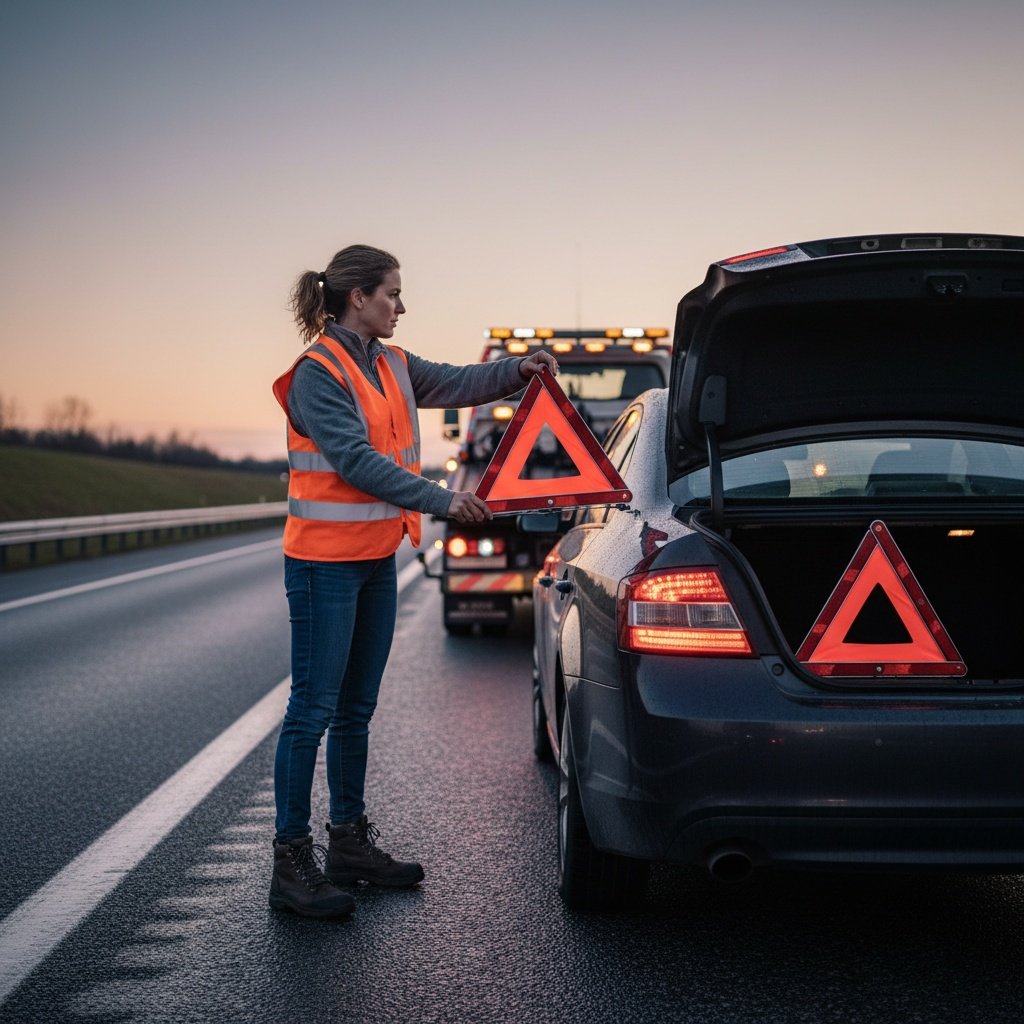
Fourth, if you have road flares or reflective triangles in your trunk and you can deploy them without entering traffic lanes, place them 200 to 300 feet behind your vehicle. This extended warning distance gives drivers more time to merge away from your position. Never walk along the highway shoulder to place warnings if traffic is heavy or fast-moving.
When to Stay Inside Your Vehicle and When to Exit
Staying inside your car is almost always safer than standing on the shoulder. Modern vehicles offer structural protection if another vehicle strikes yours. Seatbelts and airbags provide layers of defense that disappear the moment you step outside.
Exit only if your vehicle sits in an active lane and cannot be moved, or if you smell smoke or fuel and suspect fire risk. In these cases, exit through the passenger side door away from traffic, move at least 100 feet from the roadway, and climb over guardrails or barriers to create a physical shield between you and moving vehicles.
Never attempt repairs on the highway shoulder. Changing a tire or checking under the hood exposes you to traffic and increases injury risk dramatically. Professional tow services carry equipment to perform these tasks safely or transport your vehicle to a secure location.
How to Communicate Your Location to Emergency Services in Seattle
Accurate location details help responders find you faster. Highway mile markers appear on small green signs along most interstate routes. Note the last marker you passed and the direction you were traveling. If you are on a state route without clear markers, use landmarks such as exit numbers, cross streets, or prominent buildings.
Many smartphones provide GPS coordinates through mapping apps. Sharing these coordinates with dispatch ensures the tow truck reaches you even if verbal descriptions are unclear. Mention which side of the highway you are on, as service vehicles often need specific routing to access the correct shoulder safely.
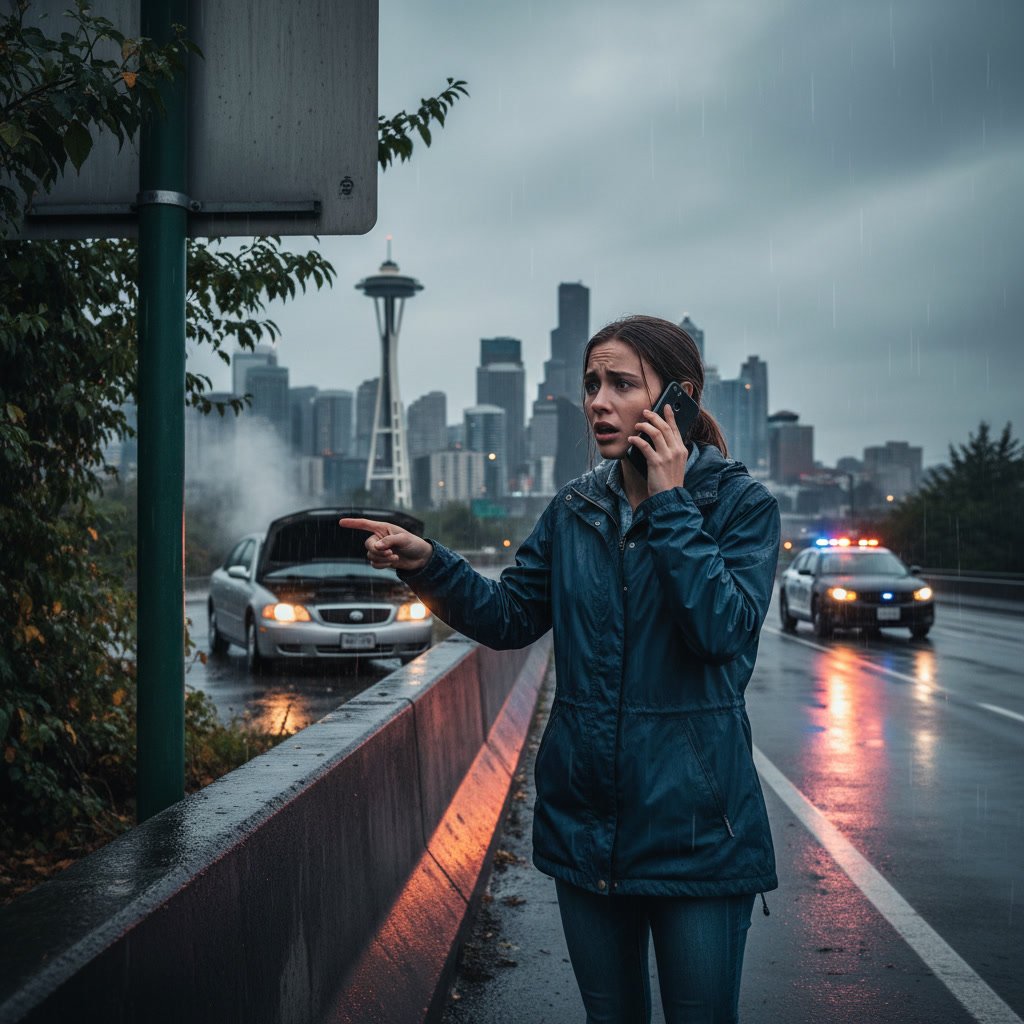
What Professional Tow Operators Do to Protect You
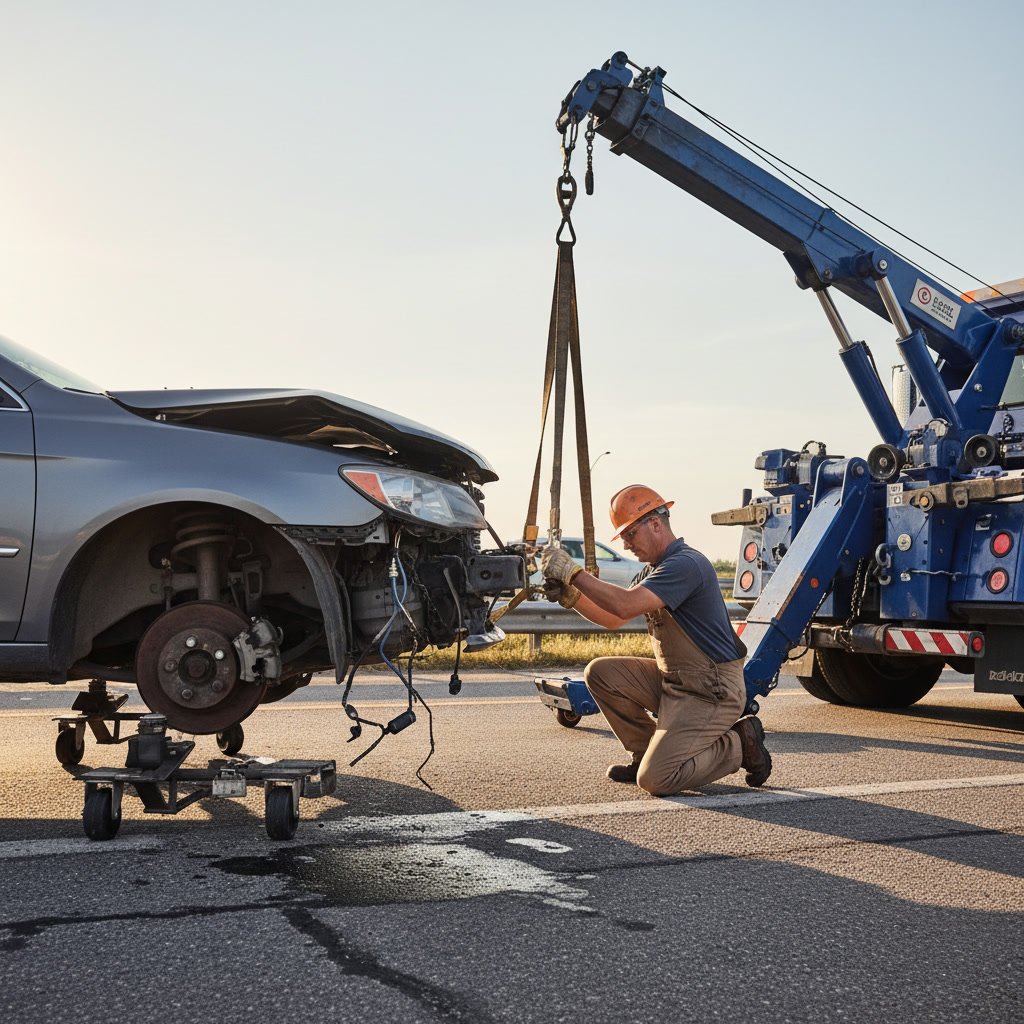
When Pinocchio Towing LLC responds to a highway breakdown, the operator positions the tow truck between your vehicle and oncoming traffic. This blocking technique uses the truck’s mass and warning lights to create a safety buffer while the operator works. Amber strobes and arrow boards direct traffic to merge away from the scene, reducing the chance of secondary collisions.
The operator conducts a quick safety check before approaching your vehicle, verifying that you are uninjured and that the vehicle has no fire or fluid leaks. Once cleared, the hookup process begins with the tow equipment positioned to minimize time spent in or near traffic lanes. Modern flatbed and wheel-lift systems allow operators to secure vehicles in under five minutes when conditions permit.
Professional operators also carry reflective gear, traffic cones, and portable lighting to enhance visibility at night or during poor weather. These tools transform a dangerous roadside scene into a managed incident zone until your vehicle is loaded and ready for transport.
Common Breakdown Causes and Prevention Tips
Mechanical failures on highways often stem from preventable issues. Overheating ranks as one of the most frequent causes, especially during summer months or on steep grades. Coolant levels should be checked regularly, and any warning lights indicating high engine temperature require immediate attention before they escalate into roadside emergencies.
Tire blowouts occur when rubber degrades or pressure drops below safe thresholds. Tread depth below 3/32 inch increases blowout risk, particularly at highway speeds. Monthly tire pressure checks and visual inspections for cracks or bulges catch problems before they force you to the shoulder.
Fuel system issues such as empty tanks or clogged filters also strand drivers. If you run out of fuel and need emergency fuel delivery, professional services bring the right fuel type directly to your location without requiring you to walk to a gas station.
How Weather Conditions Change Your Response Plan
Rain, snow, and fog demand adjustments to standard breakdown procedures. Wet pavement extends stopping distances for approaching drivers, so activating hazard lights becomes even more critical. If visibility drops below 500 feet, consider exiting your vehicle and moving well away from the roadway if you cannot be seen clearly from behind.
Winter conditions introduce additional hazards. Ice on the shoulder makes walking treacherous, and standing outside in freezing temperatures risks hypothermia. Keep emergency blankets, water, and a charged phone in your vehicle during cold months. If you must wait inside during winter, crack a window slightly to maintain ventilation if you run the engine intermittently for heat.
Extreme heat requires its own precautions. If your engine overheats and you stop on a highway, avoid opening the hood immediately. Superheated coolant can erupt violently if the pressure cap is released too soon. Wait at least 15 minutes for the system to cool before attempting any inspection, or let a professional service handle the diagnosis.

What Happens If Your Vehicle Cannot Be Moved Safely
Sometimes a breakdown occurs in a location where towing is complicated or dangerous. Narrow shoulders, bridge sections, or tunnels present challenges that require specialized equipment or traffic control. In these cases, professional operators coordinate with state patrol or highway authorities to temporarily close lanes or redirect traffic while the vehicle is secured.
Heavy vehicles or those with damaged suspension may need flatbed transport rather than wheel-lift methods. Operators assess the situation and select the appropriate equipment to prevent further damage during loading. If you are unsure whether your car needs towing instead of trying to drive, err on the side of caution and request professional evaluation.
Why 24/7 Availability Matters for Highway Emergencies
Breakdowns do not follow business hours. Late-night incidents, early morning commutes, and holiday travel all carry the same risk of mechanical failure. Towing services that operate around the clock ensure help arrives regardless of when trouble strikes.
Response times vary by location and traffic conditions, but established providers maintain dispatch systems that route the nearest available truck to your position. Pinocchio Towing LLC offers continuous coverage throughout the region, reducing wait times and getting you off the highway faster. Quick response times matter because every additional minute on the shoulder increases exposure to traffic hazards.
Preparing Your Vehicle and Yourself for Unexpected Stops
An emergency kit in your trunk provides tools and supplies that improve safety during a breakdown. Include reflective triangles, a flashlight with fresh batteries, bottled water, non-perishable snacks, and a first aid kit. A charged portable phone battery ensures you can call for help even if your vehicle’s electrical system fails.
Membership in a roadside assistance program or storing contact information for a reliable local service reduces decision-making stress when trouble occurs. Knowing who to call before you need help streamlines the process and gets assistance on the way faster. If you are in the area, you can reach out through our contact page or call directly for immediate dispatch.
Regular vehicle maintenance catches potential failures before they happen. Oil changes, brake inspections, belt replacements, and battery testing all contribute to reliability. A well-maintained vehicle is less likely to leave you stranded, but even the best-kept cars occasionally suffer unexpected component failures that require professional intervention.
Protecting Yourself and Others During Every Highway Breakdown
Highway breakdowns test your ability to stay calm under pressure and prioritize safety over convenience. The steps outlined here reduce risk, protect you from traffic, and ensure help arrives efficiently. Staying inside your vehicle, activating hazard lights, and calling for professional assistance form the foundation of a safe response.
Understanding when to exit your car, how to communicate your location, and what professional operators do to protect you transforms a dangerous situation into a manageable event. Preparation, quick action, and reliance on experienced towing services minimize exposure and get you back on the road with the least possible disruption.
If you experience a breakdown on any highway or need immediate assistance, Pinocchio Towing LLC provides 24-hour service with fast response times and professional operators trained to handle high-risk roadside situations. Call +1 206-202-0009 anytime for reliable help when you need it most.