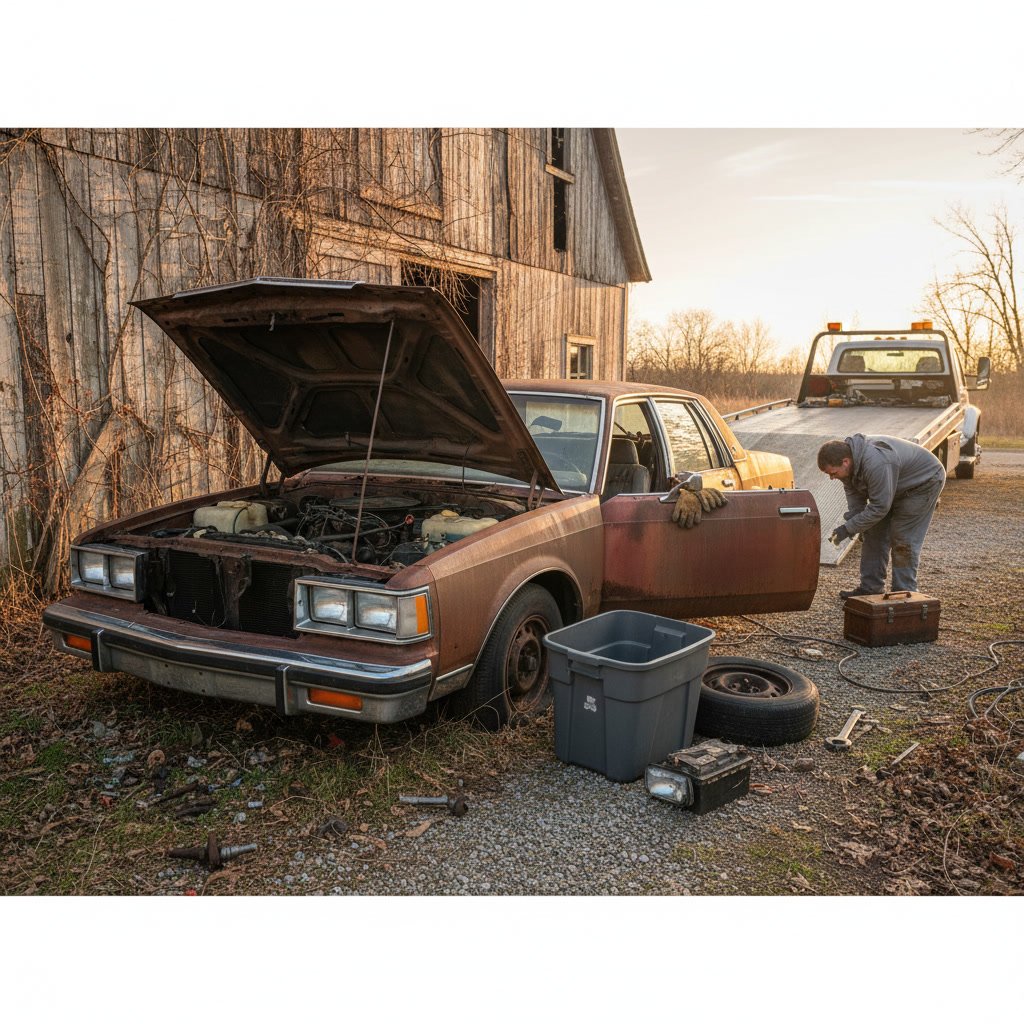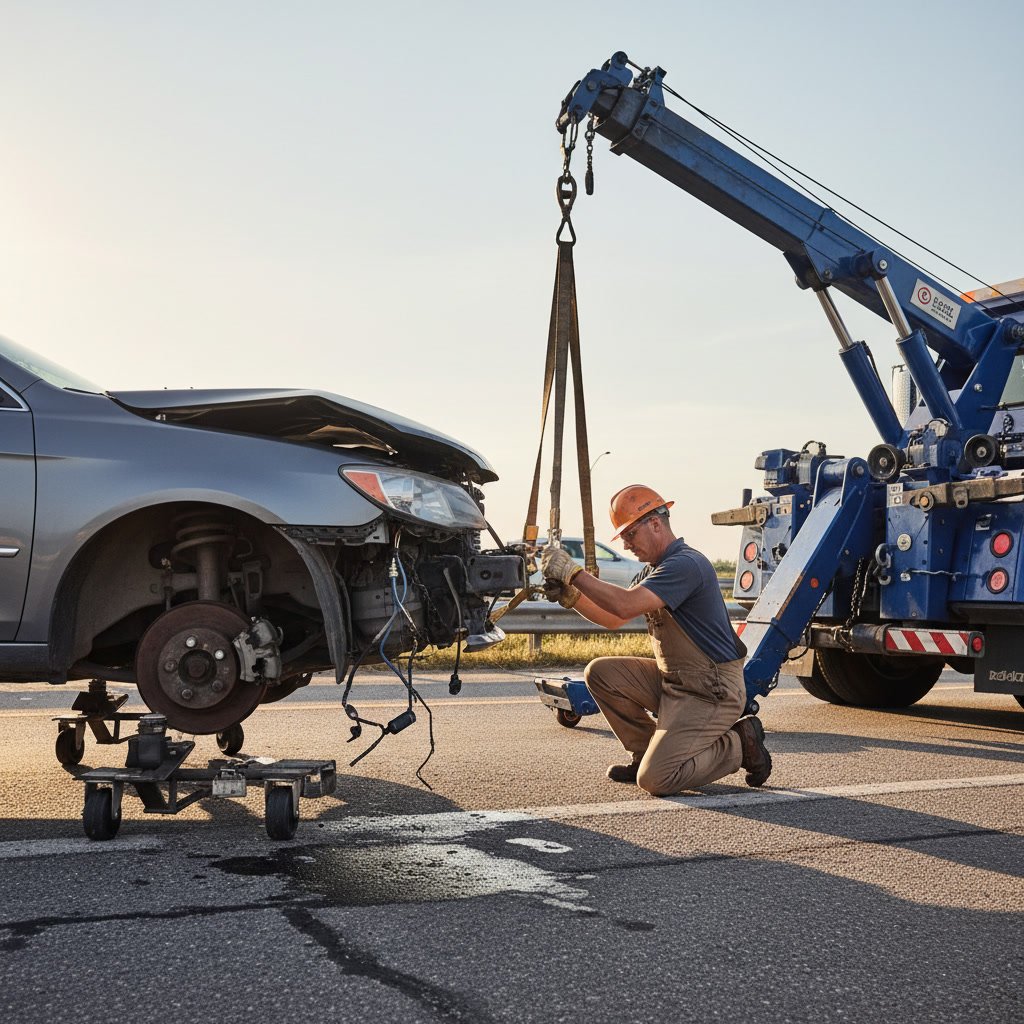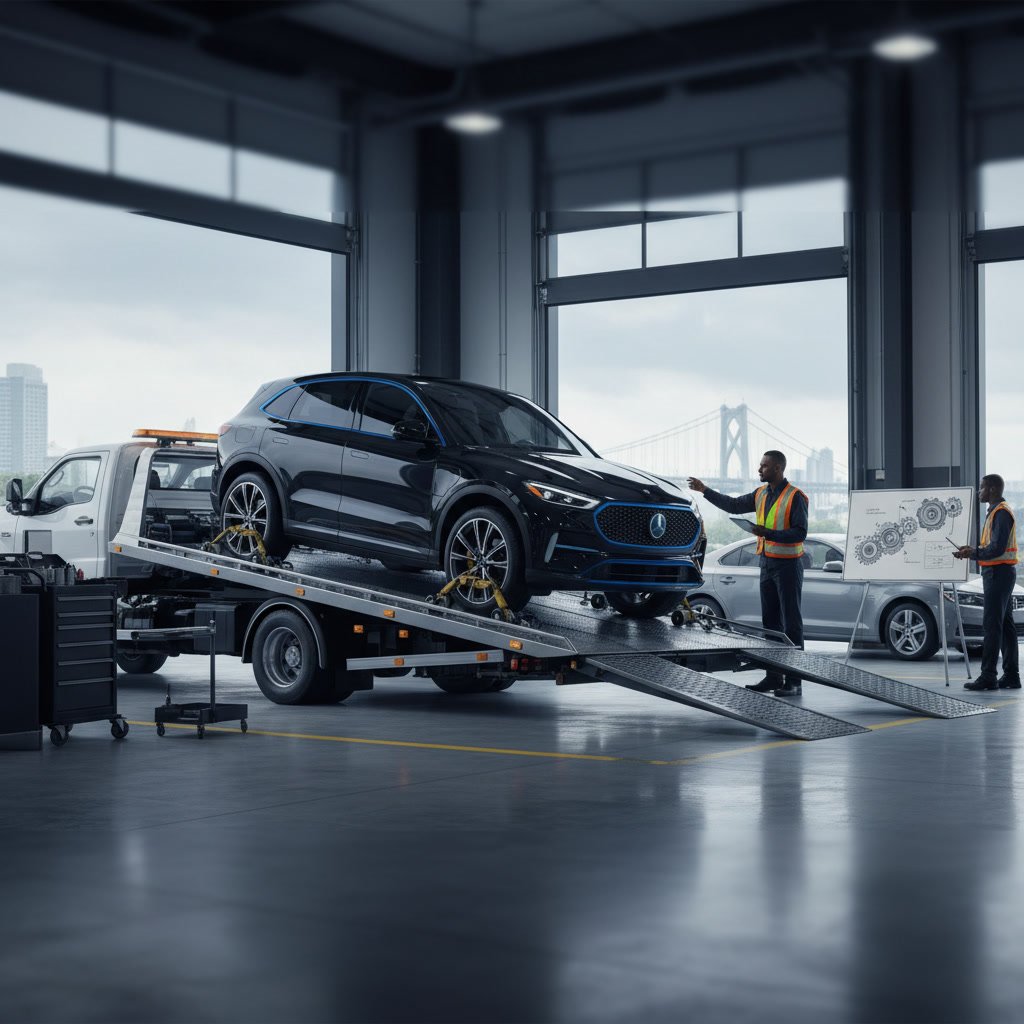

Towing electric vehicle models requires different techniques than conventional gas-powered cars. Unlike traditional vehicles with transmissions, electric cars have motors directly connected to the wheels, and moving them incorrectly can generate unwanted current that damages expensive battery systems. The safest method is flatbed towing, where all four wheels remain off the ground, preventing any rotation of the motor or drivetrain components. If a flatbed is unavailable, dolly towing with the drive wheels elevated may work for certain models, but you must consult your owner’s manual first.
Why Electric Cars Require Special Towing Procedures
Electric motors operate as generators when their wheels spin while the vehicle is off. This regenerative braking system normally recharges the battery during driving, but when towing, it sends uncontrolled current back into the system. The battery management computer expects specific voltage and current patterns, and random input from towed wheels can trigger fault codes, damage control modules, or even overheat battery cells. Tesla, Nissan Leaf, Chevrolet Bolt, and most other EVs explicitly warn against towing with any wheels on the ground.
The risk extends beyond batteries. Electric motors contain permanent magnets and delicate windings that generate resistance when forced to spin. Extended towing with wheels down creates heat buildup inside the motor housing, potentially warping components or breaking internal seals. Repair costs for electric motors and battery packs often exceed $10,000, making proper roadside assistance procedures critical.
Flatbed Towing Remains the Gold Standard for EVs
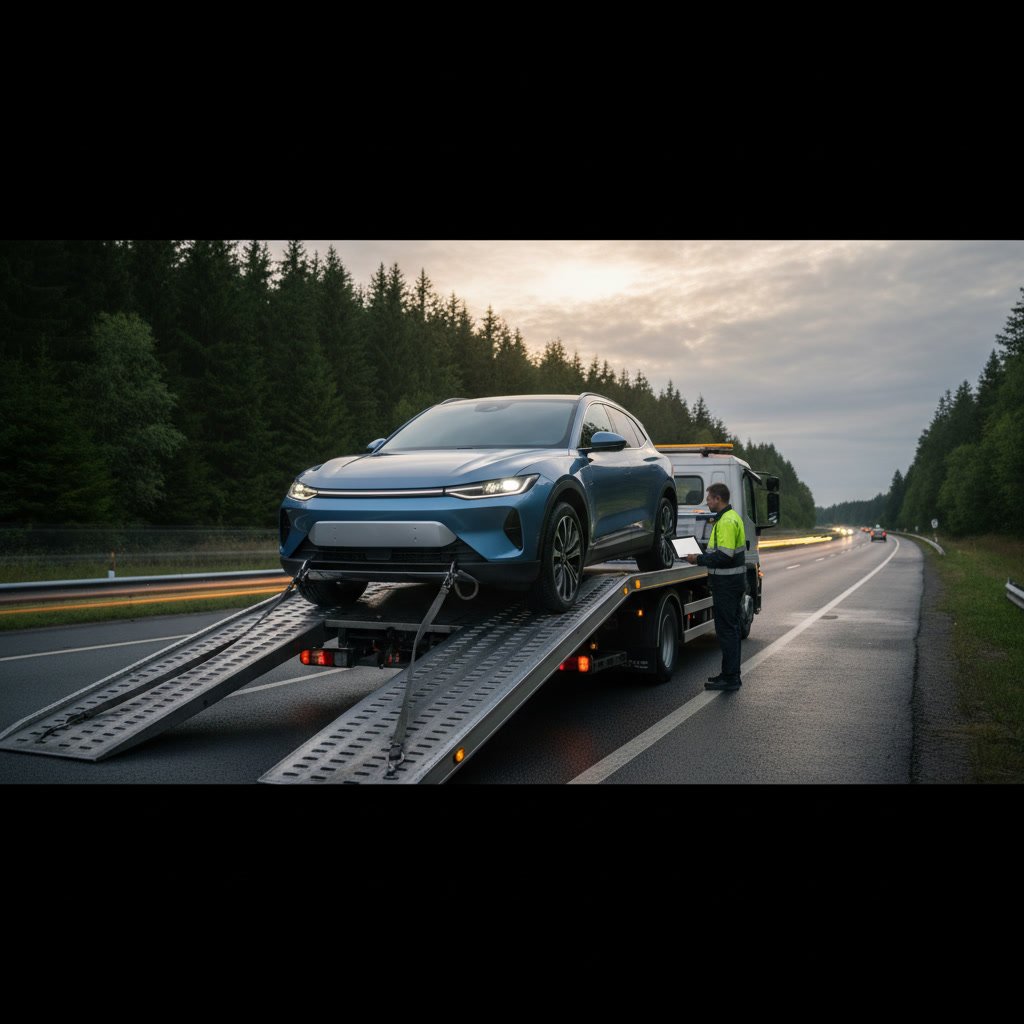
Professional flatbed trucks eliminate all risk by lifting the entire vehicle onto a platform. No wheels touch the pavement, no motors spin, and no current flows where it should not. This method protects hybrid vehicles too, since many use electric motors on specific axles. Pinocchio Towing LLC uses flatbed equipment for all electric and hybrid recoveries, ensuring zero drivetrain movement during transport.
Flatbed towing also prevents suspension damage. Electric vehicles carry heavy battery packs mounted low in the chassis, shifting weight distribution compared to gas cars. Dragging an EV with wheels on the ground places unusual stress on control arms, bushings, and alignment geometry. The additional battery weight magnifies these forces, accelerating wear on components designed for driving loads, not towing friction.
Understanding Your Specific EV Model Requirements
Not all electric cars share identical towing restrictions. Tesla Model 3, Model Y, Model S, and Model X must always ride on flatbeds with all wheels up. The owner’s manual states that towing with wheels down, even briefly, voids warranty coverage for drivetrain damage. Rivian R1T and R1S trucks follow the same strict flatbed-only rule due to their quad-motor configurations.
Some plug-in hybrids like the Toyota Prius Prime allow short-distance towing with front wheels elevated using a dolly, since the electric motor connects to the front axle. The Chevrolet Volt permits similar dolly towing for the drive wheels. However, these exceptions require confirming which axle powers the vehicle and ensuring the tow distance stays under manufacturer limits, typically 35 miles. When in doubt, choosing flatbed service eliminates guesswork and liability.
When Dolly or Wheel-Lift Towing Might Apply
A tow dolly lifts one axle while leaving the other on the ground. This works only when the lifted axle contains the electric motor and the owner’s manual explicitly permits it. For rear-wheel-drive EVs like older Tesla Model S variants, lifting the rear wheels stops motor rotation. Front-wheel-drive models need front-wheel elevation. You must also put the vehicle in neutral or transport mode, if available, to disengage parking pawls that lock the drivetrain.
Wheel-lift towing, where a hydraulic arm raises one end by the tires or frame, carries higher risk. The lifted wheels may still contact the truck’s support bar, and if the system slips even slightly, wheels can rotate. Suspension geometry also changes under this stress, potentially bending components or cracking battery pack enclosures mounted along the undercarriage. Most professional services in Seattle, WA 98178 default to flatbeds for EVs rather than risk wheel-lift complications.
Activating Transport or Tow Mode Before Moving Your EV
Many electric vehicles include a transport mode buried in the settings menu. This feature releases the parking brake, disengages the motor from the drivetrain, and allows wheels to roll freely without generating current. Tesla models require entering this mode through the touchscreen before a flatbed can winch the car onto the deck. Without transport mode active, the parking brake stays locked and the wheels will not turn, forcing unsafe dragging.
Accessing transport mode usually requires at least 12 volts in the low-voltage battery, separate from the main traction pack. If your EV is completely dead, even jumpstarting the 12-volt system may be necessary before the computer will respond. Some manufacturers include a manual release cable hidden under panels or in the trunk, but using it incorrectly can damage electronic shifters or brake actuators.
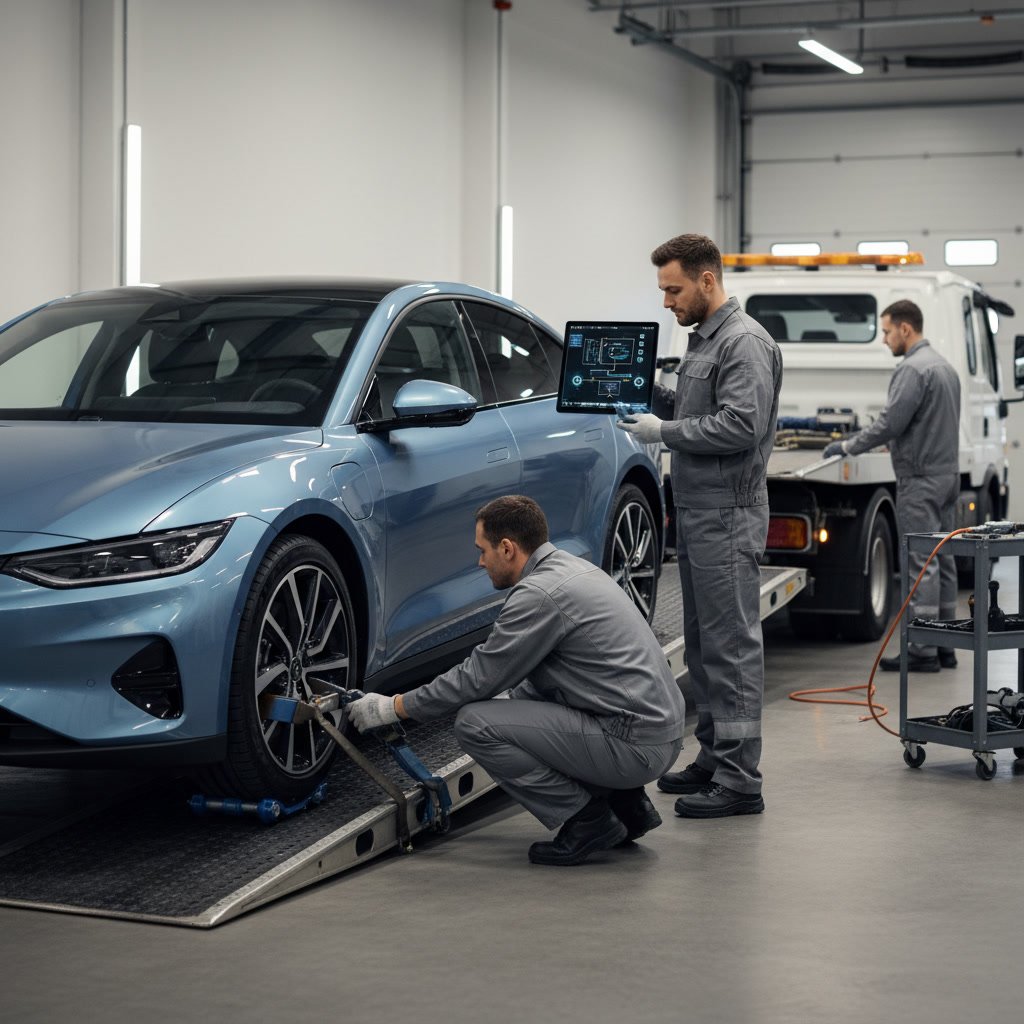
Step-by-Step Process for Safe Electric Vehicle Recovery
First, confirm the vehicle is in park and the main traction battery is off. Check the dashboard for any fault lights indicating locked brakes or drivetrain issues. Second, locate the owner’s manual section on towing and identify whether flatbed-only or dolly towing is permitted. Third, call a professional service with flatbed capability rather than attempting a DIY tow.
Once the flatbed arrives, the operator will position the truck to minimize winching distance. Activate transport mode if required, following the exact steps in your manual or on-screen prompts. The driver then attaches wheel straps or hooks to designated tow points, usually marked with icons near the front and rear bumpers. Chains secure the vehicle to the deck, and straps prevent any rolling during transit. The entire process takes 15 to 25 minutes when performed correctly.
Never attempt to push or drag an electric vehicle onto a trailer. The motors will resist rotation, and forcing them creates internal damage. If the 12-volt battery is dead and transport mode will not activate, specialized equipment can lift the vehicle without rolling the wheels, but this requires training and hydraulic skates not available to most consumers.
Common Mistakes That Lead to Expensive Damage
The most frequent error is assuming an EV can be towed like a regular car. Some owners or inexperienced tow operators hook up a strap and pull, spinning the motor and sending current spikes through the battery controller. This often triggers fault codes that require dealership software to reset, adding hundreds in diagnostic fees on top of any component damage.
Another mistake involves using wheel dollies on the wrong axle. If the electric motor drives the rear wheels but you lift the front, the rear motor spins the entire trip, overheating windings and draining or overcharging the battery. Similarly, towing in gear or with the parking brake partially engaged drags brake pads and warps rotors, which are expensive to replace on vehicles weighing 4,500 to 6,000 pounds.

What to Expect from Professional Towing Services in Seattle
Reputable operators ask what type of vehicle needs towing before dispatching a truck. When you mention an electric or hybrid model, they send a flatbed automatically. The driver should verify the make and model upon arrival and confirm towing procedures. Professional crews carry reference guides for common EVs and know where tow hooks attach without damaging fragile underbody panels.
Expect the driver to ask if you can activate transport mode and whether the 12-volt battery holds charge. They may carry a portable jump pack to power the accessories long enough to release brakes and shift into neutral. Transparent pricing is standard, and you should receive a quote before the truck leaves the yard. Similar to the process outlined in getting fast towing help when stranded, response times for EVs depend on flatbed availability, but most services prioritize electric vehicle calls due to damage risk.
Insurance and Warranty Considerations for EV Towing
Auto insurance policies typically cover towing after accidents or breakdowns, but using improper methods may void that coverage. If a tow truck damages your vehicle by dragging it with wheels down, and your owner’s manual prohibits that technique, insurers can deny the claim. Always document the towing method with photos and confirm the service uses flatbed equipment.
Manufacturer warranties explicitly exclude damage from incorrect towing. Tesla, Rivian, Ford, and other EV makers include language stating that towing with wheels on the ground terminates warranty coverage for motors, batteries, and drivetrains. A single improper tow can leave you responsible for a $15,000 battery replacement. This makes choosing qualified operators as important as the towing method itself.
Alternative Solutions When Flatbed Service Is Delayed
If your EV breaks down in a remote area and flatbed availability is limited, assess whether you can safely wait. Electric vehicles do not leak fluids or overheat while sitting, so waiting an extra hour for proper equipment is safer than risking a wheel-lift tow. Some roadside assistance plans offer loaner vehicles or rideshare credits while you wait for appropriate recovery equipment.
In extreme cases where weather or safety concerns require immediate removal, skates or go-jacks can slide under the tires, allowing the vehicle to be pushed onto a rollback without spinning the wheels. This equipment is rare outside specialized heavy-duty recovery operations, but it represents the only safe alternative when flatbeds are truly unavailable. Never accept a conventional tow just to save time or money.
Protecting Your Investment Through Proper Handling
Electric vehicles represent significant investments, and their specialized components deserve specialized care. Understanding the risks of improper towing helps you make informed decisions when breakdowns occur. Keep your owner’s manual accessible in the vehicle or saved digitally on your phone, so you can reference towing instructions immediately. Program the contact information for a flatbed-equipped service into your phone before you need it.
Regular maintenance reduces the likelihood of roadside emergencies. Battery health checks, software updates, and 12-volt battery replacements prevent dead-car scenarios that require towing. When issues do arise, choosing professional help from services experienced with electric and hybrid models protects your warranty, your vehicle, and your budget. Pinocchio Towing LLC has served the region since 2020 with expertise in handling modern drivetrains, including full battery-electric and plug-in hybrid systems.
Whether you drive a Tesla, Rivian, Nissan Leaf, or any other electric model, knowing these procedures reduces stress when roadside trouble happens. Prioritize flatbed towing, activate transport mode when possible, and never allow wheels to turn during recovery. These steps ensure your vehicle arrives safely without hidden damage that emerges weeks later. For immediate flatbed assistance with your electric vehicle, call +1 206-202-0009 anytime.