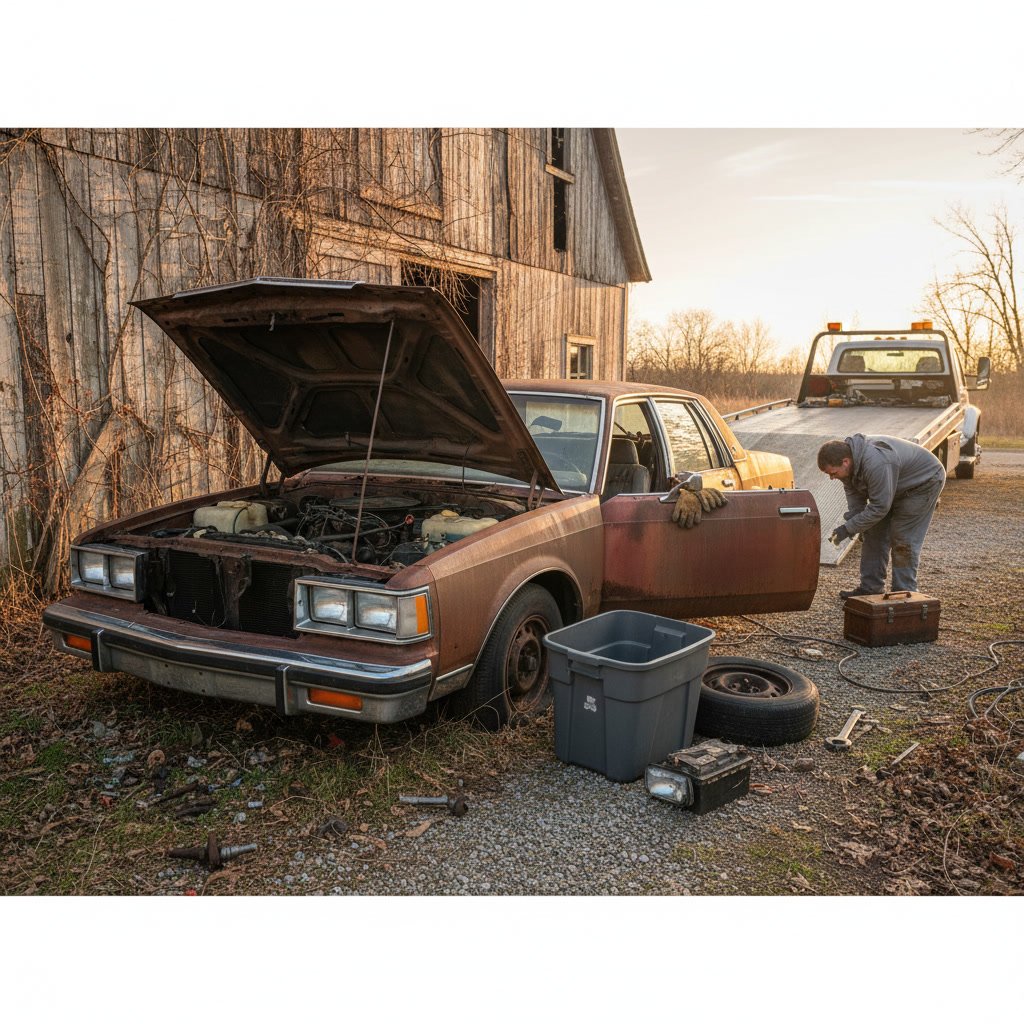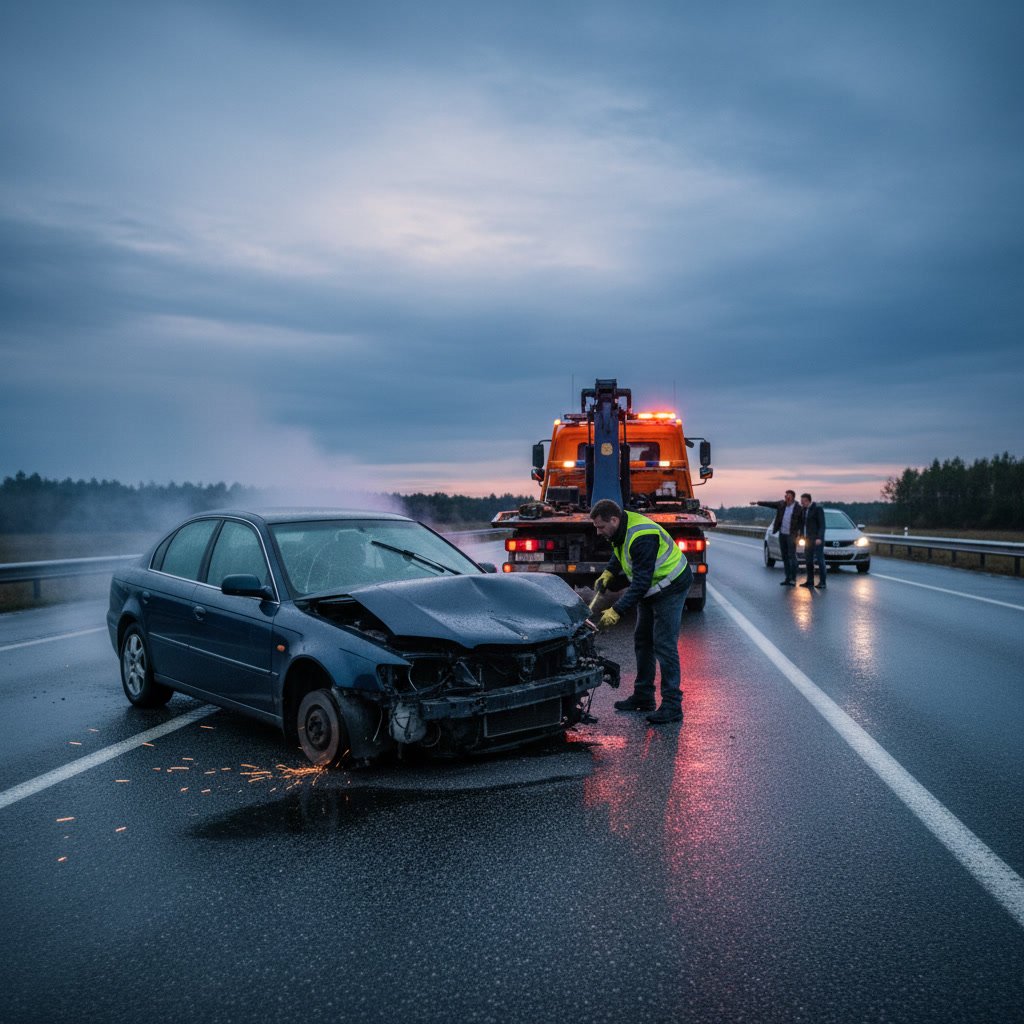
When towing broken axle or suspension damage vehicles, professionals use flatbed tow trucks, wheel lift systems, and specialized securing equipment to prevent further structural harm during transport. The process involves careful inspection, strategic lift point selection, and multi-point strapping to distribute weight away from damaged components. Unlike standard towing, these situations demand that the damaged wheel or axle remains off the ground throughout the entire move to avoid catastrophic failure or additional mechanical destruction.
Why Axle and Suspension Damage Requires Different Towing Methods
Standard hook-and-chain towing pulls a vehicle by its frame or bumper, which creates stress on the drivetrain and suspension. When an axle or suspension component is already broken, this traditional method can snap remaining mounts, tear control arms, or cause the wheel assembly to collapse entirely. A broken axle leaves the wheel unsupported, meaning any rolling motion can grind metal against metal or allow the wheel to splay outward at dangerous angles.
Suspension damage often means that shock absorbers, struts, or control arms have failed. These components normally absorb road impacts and keep the tire aligned. Without them, even a short tow can turn a repairable problem into a total loss. Professional tow operators assess the type and location of damage before selecting the safest transport method.
Initial Damage Assessment at the Breakdown Scene
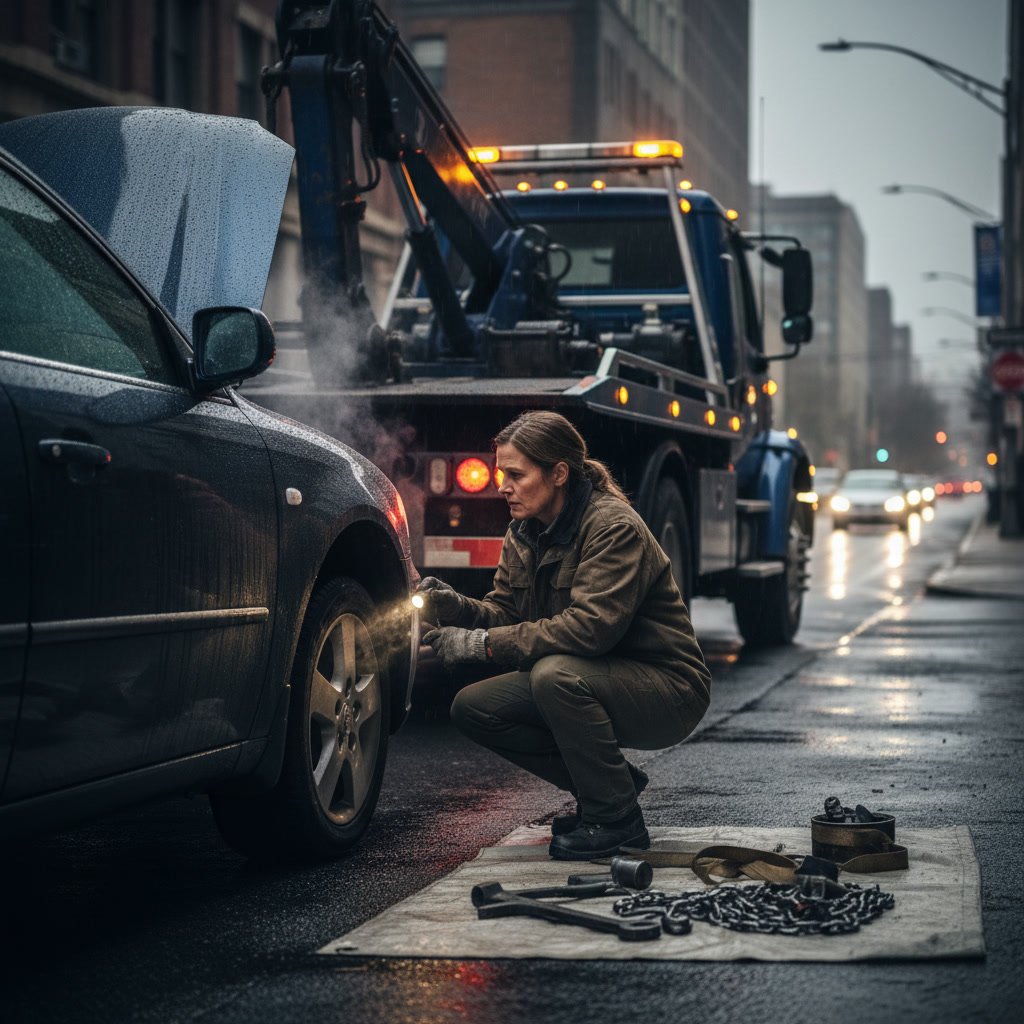
Before any equipment touches the vehicle, the driver walks around to identify which components are compromised. They look for visible breaks in the axle shaft, wheels sitting at unnatural angles, fluid leaks from hydraulic struts, or torn rubber bushings. If the wheel can be manually wiggled more than half an inch in any direction, the suspension or bearing assembly is likely failed.
The operator also checks whether the damage affects the front or rear axle, and whether it is on one side or both. A single rear axle break on a front-wheel-drive sedan is easier to manage than dual front suspension failure on an all-wheel-drive SUV. This information determines whether a flatbed, wheel lift, or dolly system will be used.
Flatbed Towing for Complete Suspension Failure
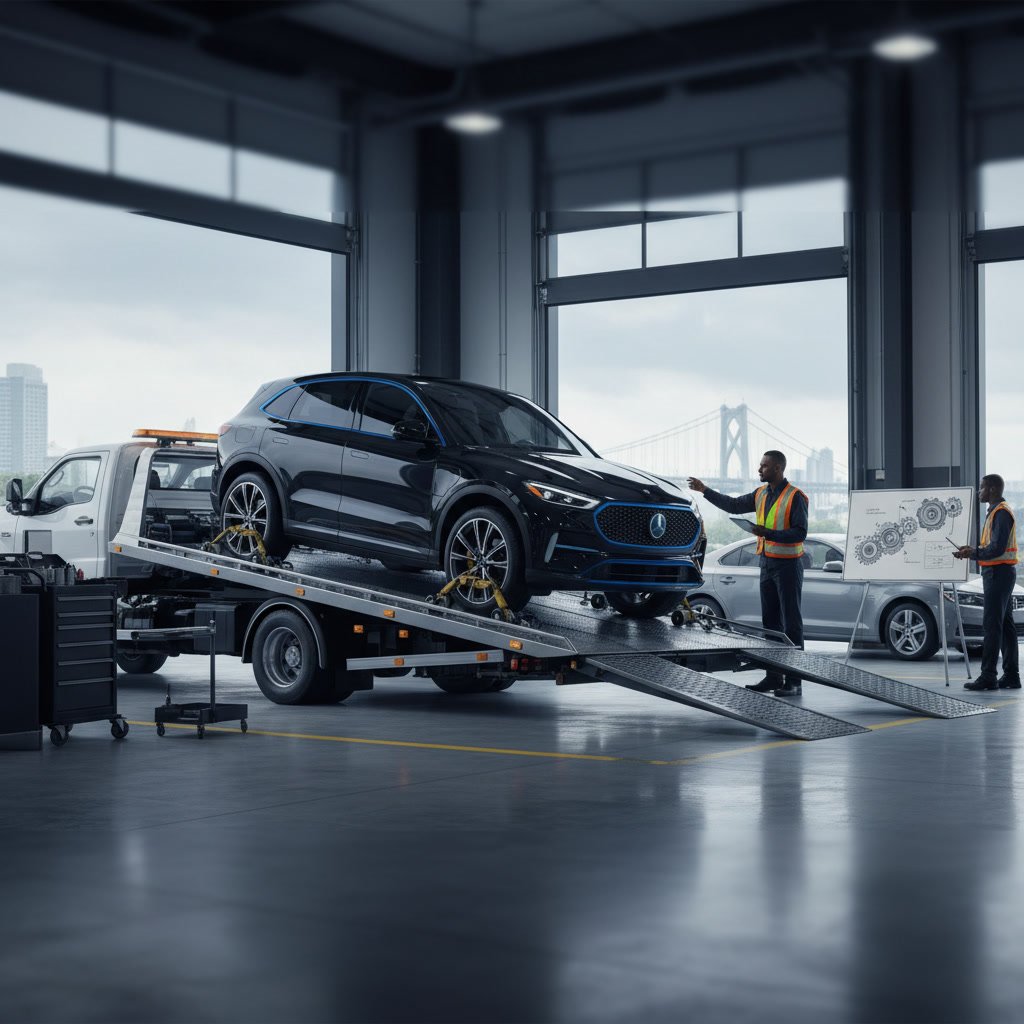
When multiple suspension components are damaged or the axle is completely severed, a flatbed is the safest option. The entire vehicle is lifted onto the truck bed without any wheels touching the ground. This eliminates all rolling stress and keeps the broken parts stationary.
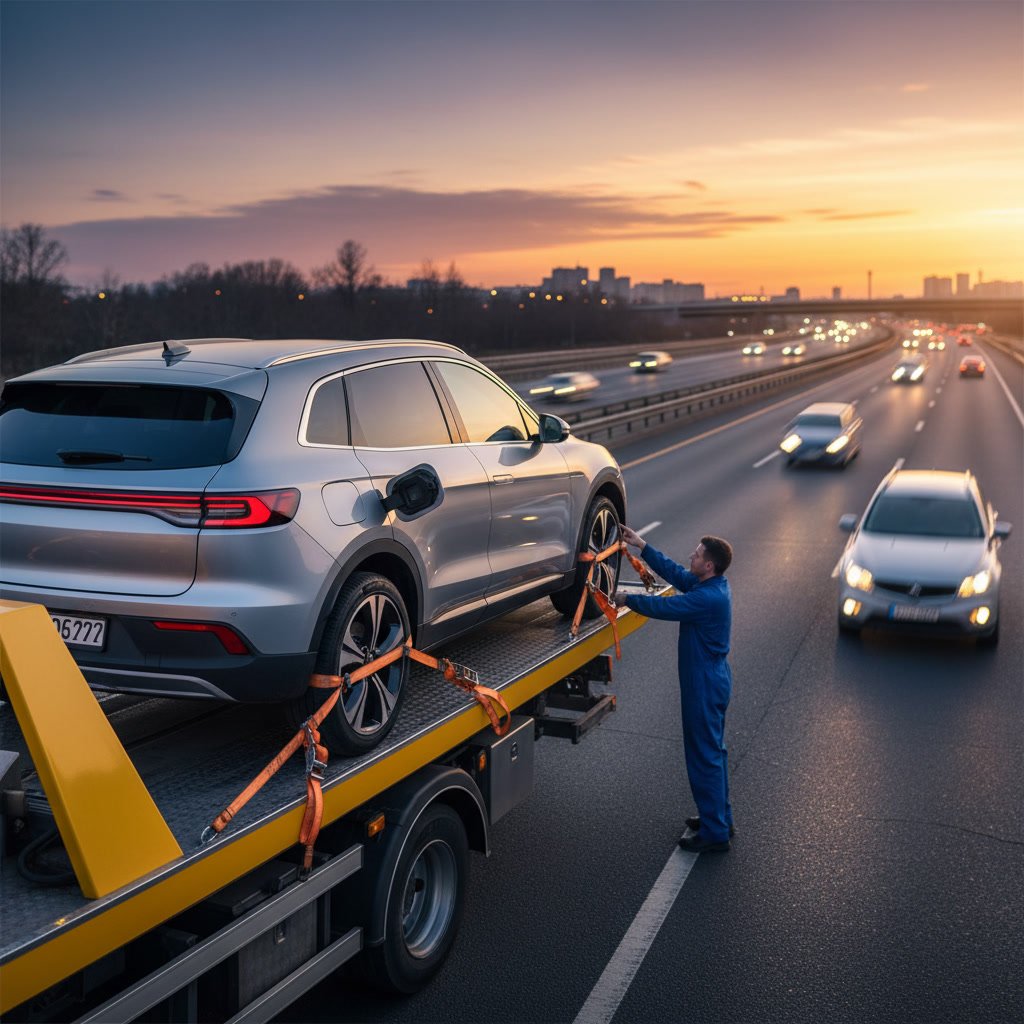
The driver positions the flatbed behind or alongside the vehicle, then uses a hydraulic winch with a steel cable or synthetic strap to pull it onto the bed. The winch hook attaches to the vehicle’s frame or tow points, never to damaged suspension components. Once on the bed, the vehicle is secured with four to six straps anchored to the frame at multiple points, avoiding contact with the broken axle or suspension mounts.
Wheel Lift Systems for Single-Axle Damage in Seattle
If only one axle is damaged and the other remains functional, a wheel lift system can be used to raise the broken end off the ground. The lift arms slide under the functional wheels, and hydraulic pressure raises that end of the vehicle. The damaged axle stays elevated throughout transport, preventing any rotation or ground contact.
This method is common for rear axle breaks on front-wheel-drive cars. The tow truck lifts the rear wheels, leaving the front wheels on the ground to roll normally. Because the broken rear axle is suspended in the air, no additional stress is placed on the damaged components. Straps secure the lifted wheels to the lift arms, and safety chains attach to the vehicle frame as a backup.
Securing the Vehicle with Multi-Point Strapping
Once the vehicle is positioned, the driver uses heavy-duty ratchet straps rated for at least 3,000 pounds each. These straps loop around structural frame points, never around suspension arms, axles, or body panels. On a flatbed, four straps form an X pattern across the vehicle, with two additional straps over the front and rear axles.
Each strap is tightened incrementally to avoid uneven pressure that could shift the vehicle sideways. The goal is to eliminate all movement without compressing the suspension further. Rubber padding is placed between the straps and any painted surfaces to prevent scratches. Safety chains provide a secondary attachment in case a strap fails during transport.
Using Dollies and Go-Jacks for Steering Complications
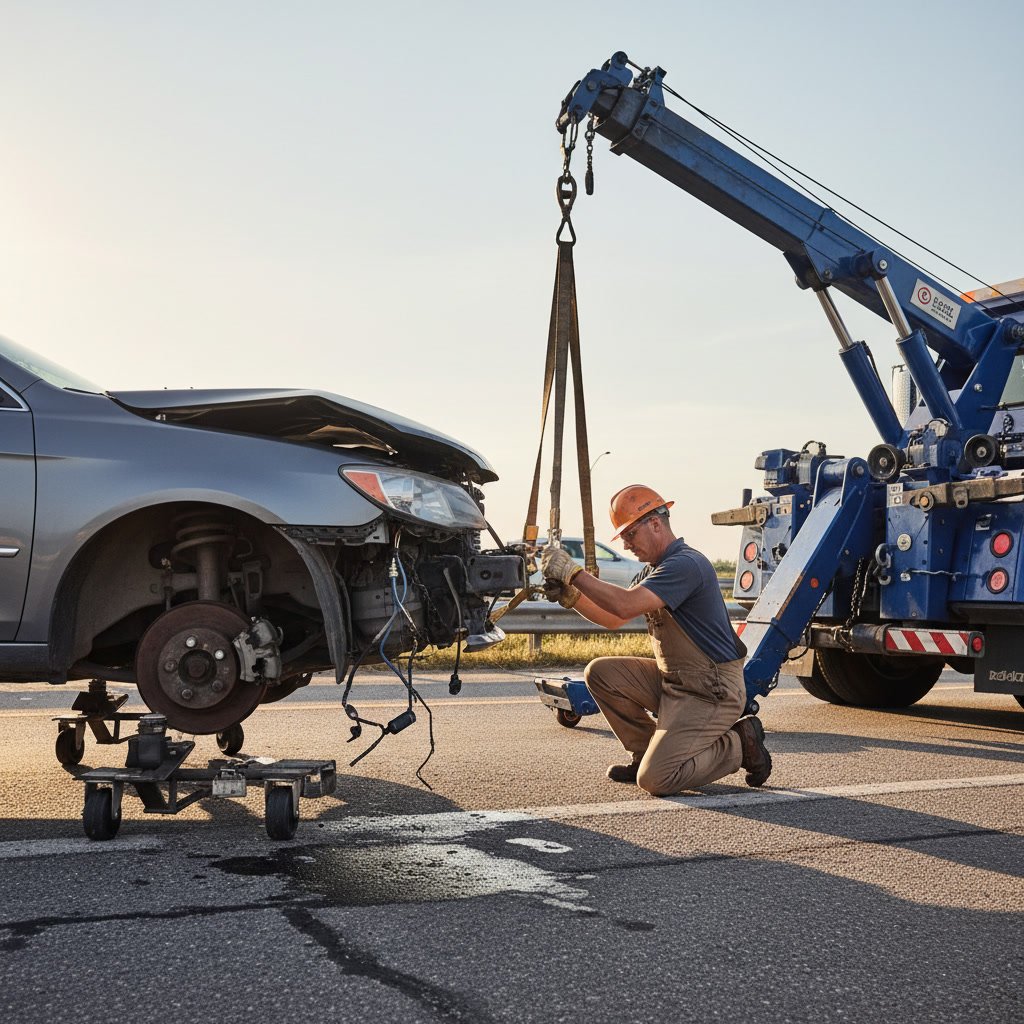
When the damaged suspension affects the steering system, the wheels may not roll straight. Go-jacks are hydraulic dollies that slide under each wheel, allowing the vehicle to be moved in any direction without the wheels rotating. This is critical for vehicles with broken tie rods, steering knuckles, or ball joints that prevent normal rolling.
The driver places one go-jack under each damaged wheel, then pumps the hydraulic pedal to lift that wheel a few inches off the ground. The go-jack’s swivel casters allow the vehicle to be guided onto the flatbed or into position for a wheel lift. This method is slower but prevents the damaged wheels from dragging or binding, which could cause additional frame damage.
Step-by-Step Flatbed Loading Process for Broken Axles
First, the flatbed is tilted to its lowest angle, usually between 10 and 15 degrees, to minimize the incline. Second, the winch cable is attached to a frame-mounted tow hook or the front subframe, never to bumper covers or plastic fascia. Third, the winch is engaged slowly, pulling the vehicle up the bed at a controlled speed of about one foot per second.
Fourth, the driver monitors the damaged axle to ensure it does not catch on the bed or drag. If the wheel assembly hangs too low, a small wooden block is placed under the brake rotor to lift it clear. Fifth, once the vehicle is fully on the bed, the winch is released and the cable is removed. Sixth, the straps are applied at the four corners and tightened in sequence. Seventh, the bed is lowered to its travel position, locking the vehicle in place for transport.
Preventing Secondary Damage During Transport
Even with proper securing, road vibrations and sudden stops can shift a vehicle with broken suspension. Pinocchio Towing LLC drivers take wider turns and avoid potholes to minimize lateral forces. They also maintain lower speeds, typically 10 to 15 miles per hour below the posted limit, to reduce inertia during braking.
If the broken axle has sharp edges, the driver wraps them with shop towels or foam padding to prevent puncturing the flatbed surface or damaging other components. Fluid leaks from damaged struts are contained with absorbent mats placed under the affected area. These small steps prevent a towing job from becoming a cleanup or repair liability.
Why Professional Equipment Matters for Suspension Damage
Consumer-grade tow straps and chains sold at auto parts stores are rated for vehicle recovery in mud or snow, not for securing a vehicle during highway transport. Professional ratchet straps use polyester webbing with reinforced stitching and steel ratchets that lock under tension. They are inspected before every use for fraying, rust, or weakened stitching.
Flatbed hydraulics are designed to handle uneven weight distribution, which is common when one side of a vehicle has a collapsed suspension. The bed can be tilted left or right to compensate, preventing the vehicle from sliding sideways during loading. This level of control is impossible with improvised equipment or non-commercial tow trucks.
Common Mistakes That Worsen Axle and Suspension Damage
Attempting to drive a vehicle with a broken axle is the most frequent error. Even a short distance can destroy the transmission, differential, or wheel bearing. The second mistake is using a wheel dolly under the broken wheel, which still allows rotation and grinding. The third error is attaching tow straps to suspension components instead of the frame, which can rip the damaged parts completely off.
Some drivers try to lift the damaged end with a jack and then tow the vehicle on three wheels. This creates extreme instability and can cause the vehicle to tip or the jack to slip. Professional towing avoids all these risks by using equipment specifically designed for non-rolling transport. If you notice signs that your vehicle needs immediate professional attention rather than attempting to drive it, calling for roadside assistance is always the safer choice.
Choosing the Right Service for Your Situation
Not every towing company has flatbed trucks or wheel lift systems capable of handling severe suspension damage. When you call for help, describe the exact symptoms: whether the wheel is tilted, if you hear grinding metal, or if the vehicle is sitting lower on one side. This information helps the dispatcher send the right equipment on the first trip.
Pinocchio Towing LLC maintains a fleet that includes flatbeds and specialized lifting equipment for all types of mechanical failure. Operators receive ongoing training in damage assessment and securing techniques to ensure your vehicle arrives at the repair shop in the same condition it left the breakdown scene. Similar to how professional service operates from call to delivery, every step follows a documented procedure designed to protect your vehicle.
Protecting Your Investment Through Expert Handling
Axle and suspension repairs are expensive, often running between 800 and 2,500 dollars depending on the vehicle. Improper towing can double that cost by damaging the frame, transmission mounts, or brake lines. The difference between a repairable breakdown and a total loss often comes down to how the vehicle was transported in the first hour after failure.
Professional towing with proper securing methods ensures that only the original damaged components need replacement. The frame stays straight, the undamaged wheels remain aligned, and no additional stress is placed on the drivetrain. This level of care protects both your safety and your financial investment in the vehicle.
When your vehicle suffers axle or suspension failure, the method used to secure and transport it directly determines the scope of repairs ahead. Trained professionals combine the right equipment with proven techniques to keep broken components stable and prevent compounding damage during the move. Reach out to our team at +1 206-202-0009 anytime for flatbed and specialized towing that handles your breakdown with the technical precision it requires.