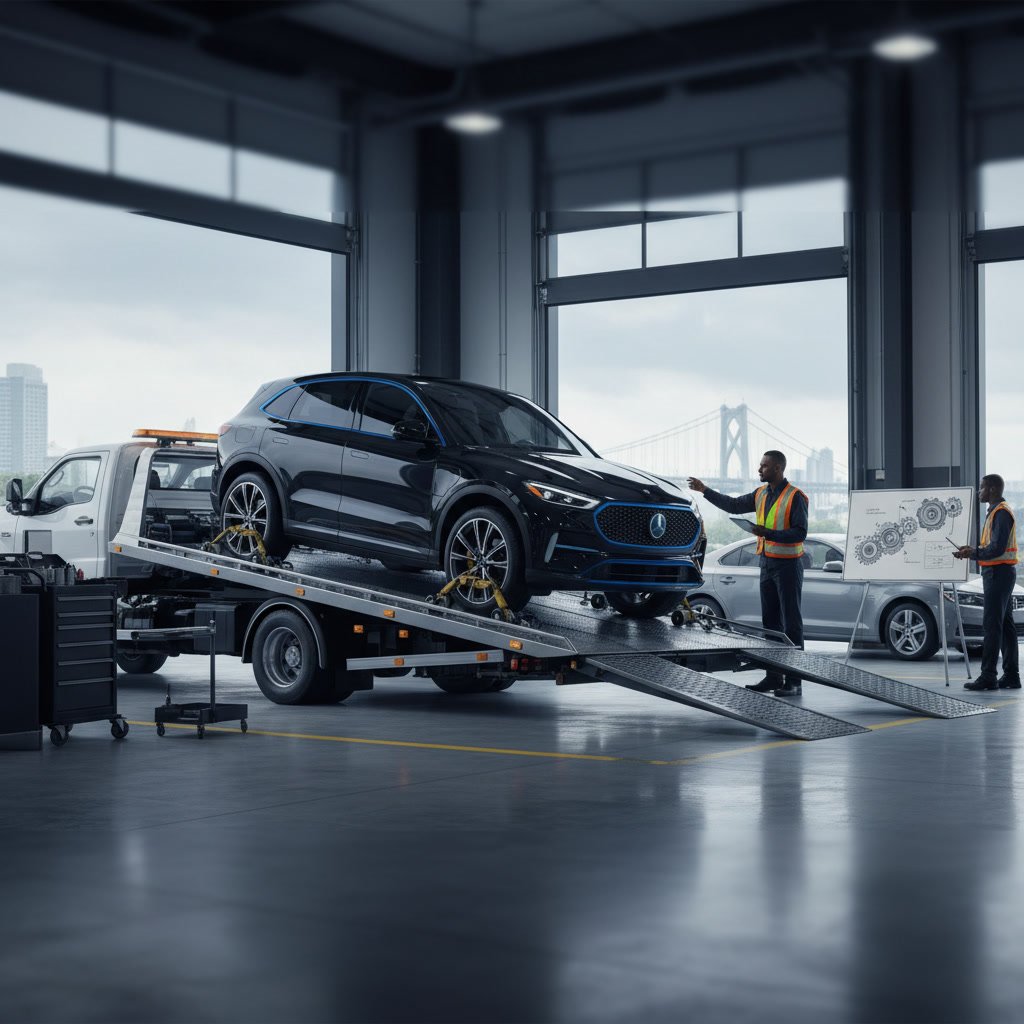
All-wheel drive and four-wheel drive vehicles need special handling during a tow to avoid thousands of dollars in transmission and drivetrain damage. Unlike front-wheel or rear-wheel drive cars, AWD towing requirements demand that all four wheels remain off the ground or that specific drivetrain components be disconnected. Standard hook-and-chain or two-wheel lift methods that work fine for conventional vehicles can destroy an AWD system’s transfer case, transmission seals, or differentials within just a few miles.
Why AWD and 4WD Systems Are Vulnerable During Towing
All-wheel drive and four-wheel drive systems distribute engine power to all four wheels simultaneously through a transfer case and center differential. When you tow these vehicles with two wheels on the ground, those grounded wheels rotate the driveshaft, transmission components, and transfer case without the engine running to provide lubrication. The resulting metal-on-metal friction causes rapid overheating and catastrophic internal damage.
Most AWD vehicles use a constant power split between front and rear axles, meaning any wheel rotation forces the entire drivetrain to move. Even part-time 4WD systems locked in four-wheel drive mode face the same problem. A ten-mile tow with wheels down can generate enough heat to warp gears, strip splines, or crack housings that cost $3,000 to $8,000 to replace.
The Only Safe Towing Method for Most AWD Vehicles
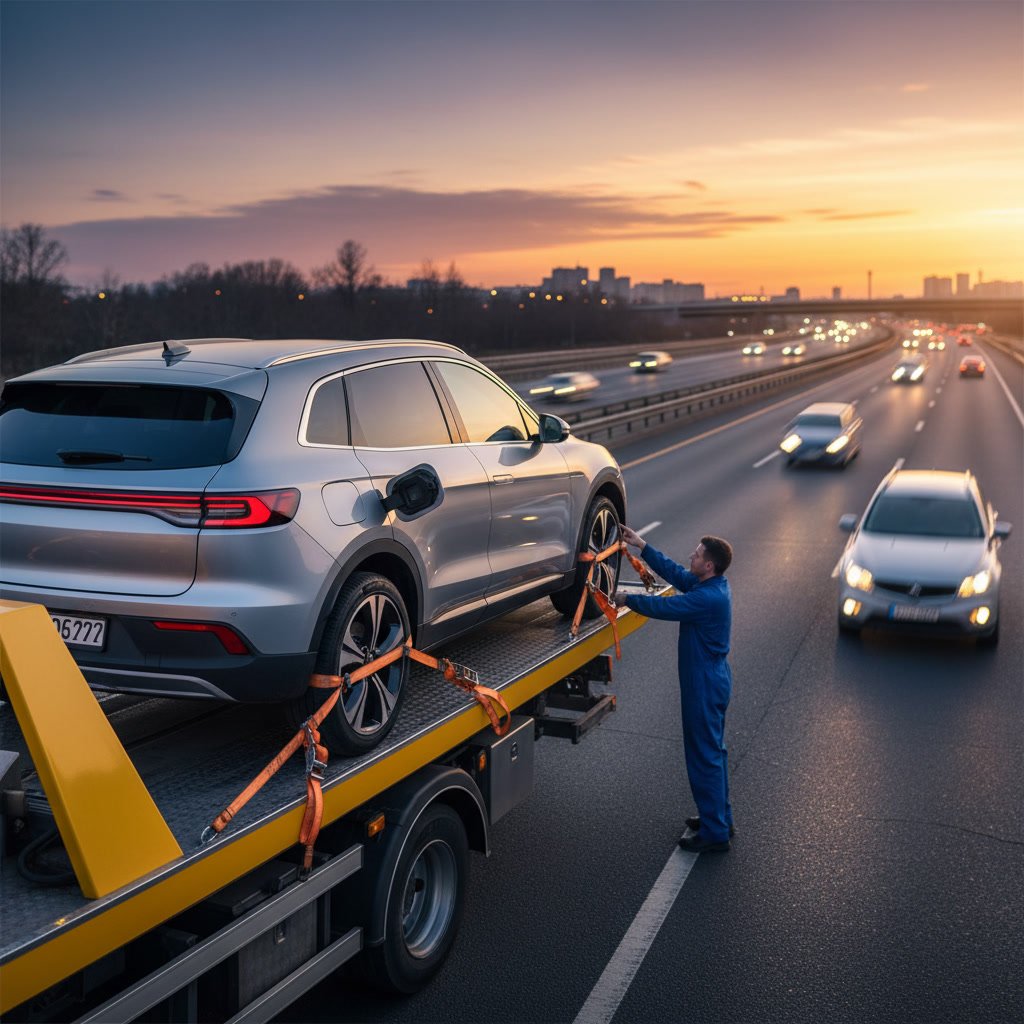
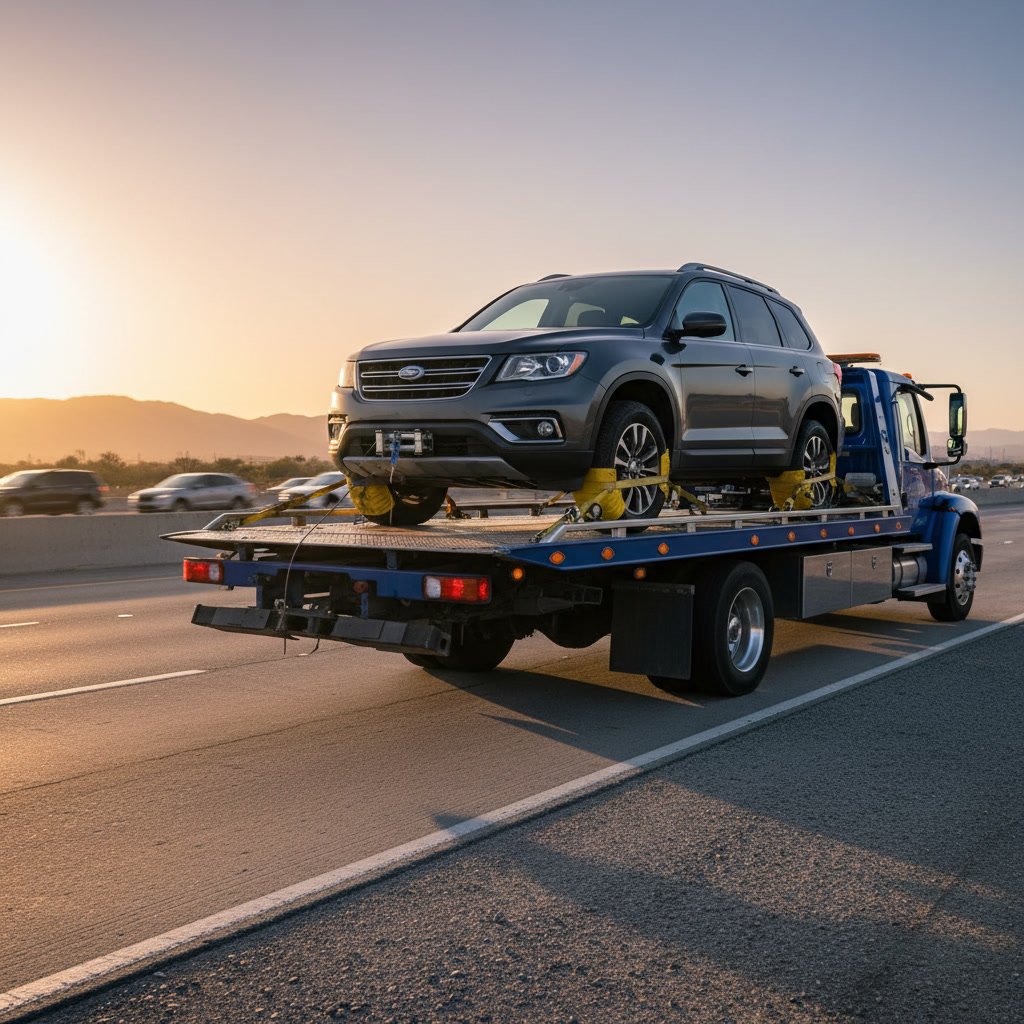
Flatbed towing remains the gold standard for all-wheel drive vehicles because it lifts all four wheels completely off the pavement. The vehicle rides on a hydraulic platform with no drivetrain components in motion, eliminating any risk of internal damage. Professional roadside assistance providers use wheel straps and tire chocks to secure the vehicle firmly to the deck.
This method works for every AWD configuration, from Subarus and Audis to modern crossovers and luxury sedans. It also protects low ground-clearance vehicles from scraping and preserves alignment settings. When you need reliable transport that respects your vehicle’s engineering, flatbed service is non-negotiable.
When Wheel Dollies Offer a Workable Alternative
If a flatbed is unavailable, professional tow operators can use a wheel dolly system that lifts the rear wheels onto small wheeled platforms while the front wheels rest on a tow lift. This keeps all four wheels off the ground during transport. The setup requires two dollies, proper weight distribution, and secure chains.
However, this method takes longer to set up and works best for shorter distances on smooth roads. It also demands operator expertise to prevent the dollies from shifting or the vehicle from becoming unbalanced. For peace of mind and faster service, flatbed remains the superior choice.
Part-Time 4WD Vehicles and Neutral Transfer Case Settings
Many traditional four-wheel drive trucks and SUVs feature part-time systems that allow the transfer case to shift into neutral. When placed in this neutral setting, the transfer case disengages, allowing the driveshaft to spin freely without turning internal gears. This makes two-wheel towing possible without drivetrain damage.
You must consult your owner’s manual to confirm your specific model supports neutral towing and follow the exact steps for engaging the setting. Skipping a step or misunderstanding the procedure can leave the transfer case partially engaged, leading to the same damage as towing in drive mode. When in doubt, request flatbed service rather than risk a costly mistake.
Common AWD Towing Mistakes in Seattle and Surrounding Areas
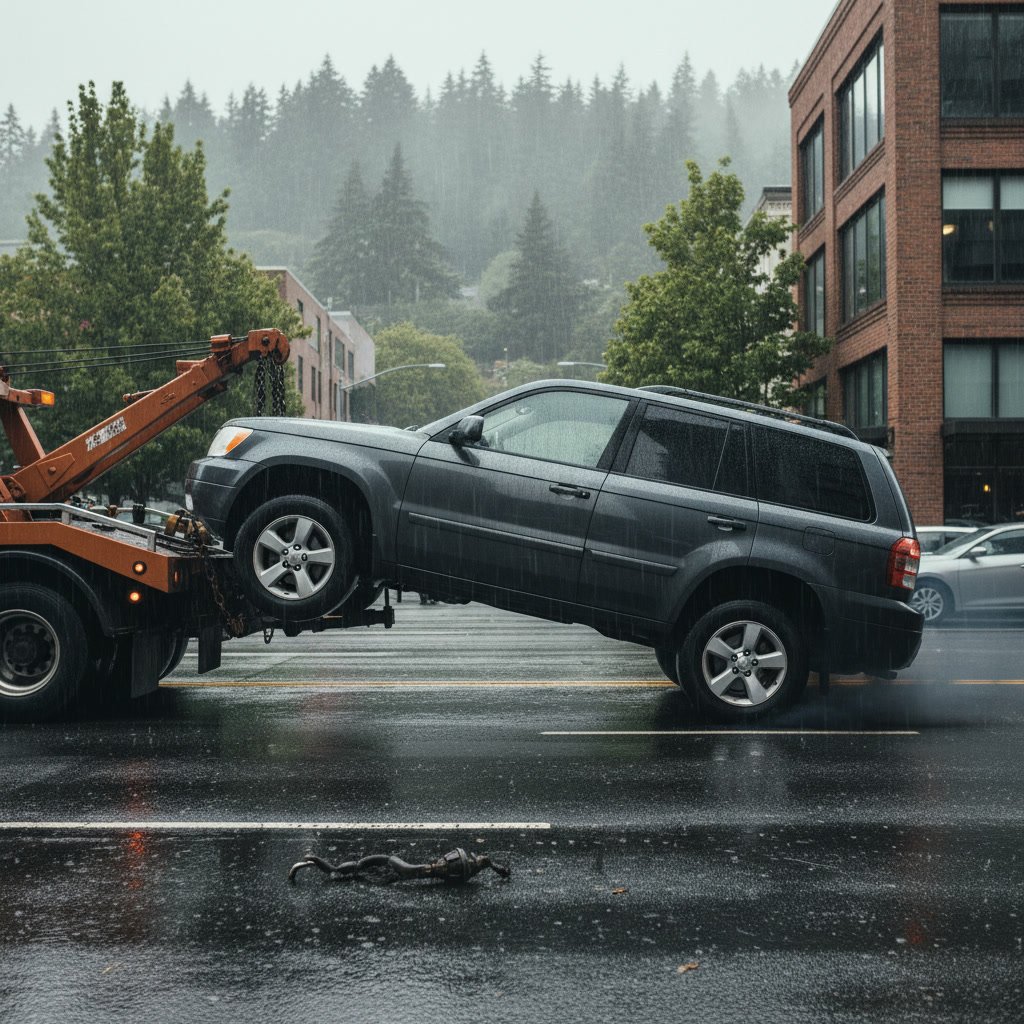
One frequent error occurs when drivers assume their AWD crossover can be towed like a standard sedan because it looks similar. Modern vehicles from Honda, Toyota, Mazda, and Nissan increasingly use full-time AWD systems that cannot tolerate wheels-down towing under any circumstance. Another mistake involves using a traditional tow dolly that lifts only the front wheels, leaving the rear wheels on the ground and the drivetrain engaged.
Some operators attempt to disconnect the rear driveshaft, but this approach requires mechanical knowledge, the right tools, and the ability to safely reinstall the shaft later. Improper disconnection can cause the driveshaft to drag, damage the undercarriage, or create a dangerous road hazard. For drivers throughout Seattle, WA 98178, choosing an experienced operator eliminates these risks entirely.
How to Identify Your Vehicle’s Drivetrain Configuration
Check your owner’s manual or the manufacturer’s website for drivetrain specifications. Look for terms like “all-wheel drive,” “4WD,” “quattro,” “xDrive,” “SH-AWD,” or “4MATIC.” Your vehicle identification number (VIN) also reveals drivetrain type when decoded through online tools or dealership service departments.
Many vehicles display a badge on the rear liftgate or trunk lid indicating AWD or 4WD. If your car has a transfer case lever or electronic dial with settings like “4H,” “4L,” or “Auto,” it uses a four-wheel drive system. When you cannot confirm the drivetrain type before calling for a tow, always inform the dispatcher that you need flatbed service as a precaution.
What Happens If an AWD Vehicle Is Towed Incorrectly
The damage begins within the first mile. Without engine-driven lubrication, metal gears and bearings inside the transfer case and transmission grind against each other at high speeds. Temperatures inside these components can exceed 300 degrees Fahrenheit, causing seals to melt, gaskets to fail, and metal surfaces to score.
By the time you reach five miles, internal components may seize completely, locking the drivetrain and potentially causing wheel lockup. Repair costs typically start around $2,500 for transfer case replacement and climb past $6,000 if the transmission or differentials sustain damage. Some vehicles require complete drivetrain rebuilds that exceed the car’s resale value.
Why Experienced Operators Ask About Drivetrain Type
Professional towing services ask detailed questions about your vehicle’s make, model, and drivetrain configuration before dispatching a truck. This allows them to send the correct equipment on the first call, avoiding delays and preventing damage. Operators trained in AWD systems understand the differences between Subaru’s symmetrical system, BMW’s xDrive, and Toyota’s Dynamic Torque Control.
These details matter because some AWD vehicles allow limited flat-towing for short distances at low speeds, while others prohibit it entirely. Experienced operators also know which models require specific tie-down points or have fragile undercarriage components that standard tow hooks might damage. This expertise protects both your vehicle and your wallet.
Step-by-Step Proper AWD Towing Procedure
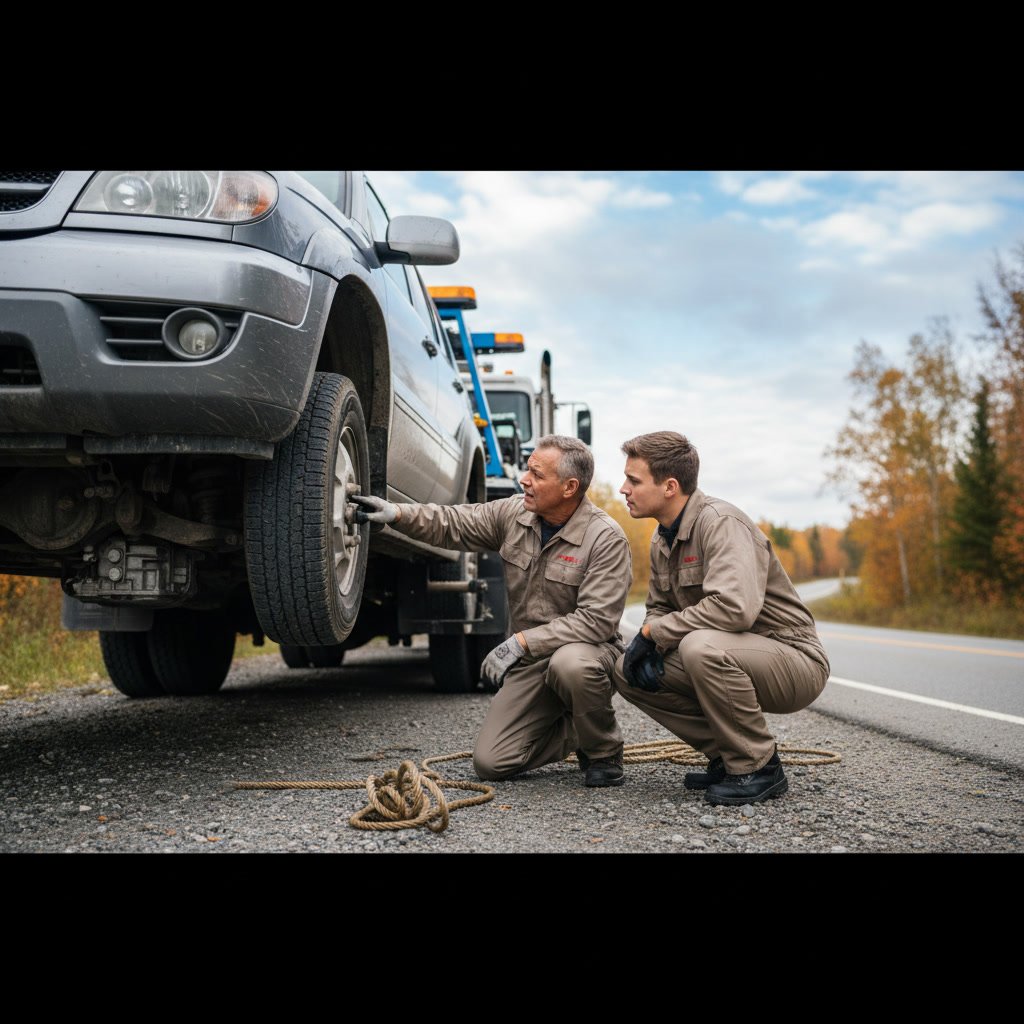
First, the operator confirms the vehicle’s drivetrain type and checks for any special manufacturer instructions. Second, the flatbed or dolly equipment is positioned and the hydraulic systems are tested. Third, the vehicle is carefully loaded using wheel straps or chains attached to manufacturer-approved tie-down points, never to suspension components or axles.
Fourth, the operator secures all four corners of the vehicle using ratchet straps rated for the vehicle’s weight, applying even tension to prevent shifting during transport. Fifth, the parking brake is released (or engaged, depending on the system), and the transmission is placed in the manufacturer-recommended position. Finally, the operator performs a walk-around inspection, checking clearance, strap tension, and lighting before departure.
This methodical approach prevents the common errors that damage vehicles and create liability issues. It also ensures compliance with Department of Transportation regulations for commercial towing operations.
Protecting Your Investment Through Proper Service
Your AWD or 4WD vehicle represents a significant financial investment, often costing $10,000 to $30,000 more than a comparable two-wheel drive model. That premium pays for advanced traction, safety, and performance, but it also demands specialized care during transport. Choosing a towing provider that understands these systems protects that investment and prevents avoidable repair bills.
Ask potential providers whether they own flatbed trucks, whether their operators receive drivetrain-specific training, and whether they carry adequate insurance for high-value vehicles. A provider that cannot answer these questions clearly may not have the expertise your vehicle requires. Similar to knowing how to protect your transmission and suspension during a tow, understanding AWD systems separates competent operators from those who create expensive problems.
Choosing the Right Towing Partner for Your AWD Vehicle
When your all-wheel drive vehicle breaks down or needs transport, the towing method determines whether you drive away unharmed or face a major repair bill. Flatbed service eliminates guesswork and provides complete drivetrain protection for every AWD and 4WD configuration. Wheel dollies offer a secondary option when used correctly, but they require expertise and careful execution. Never allow an operator to tow your AWD vehicle with two wheels on the ground unless your owner’s manual explicitly permits it and you have verified the transfer case is in neutral.
Pinocchio Towing LLC has served drivers throughout the Seattle area since 2020, providing flatbed towing and transport services that respect the engineering of modern AWD systems. Our operators understand the critical differences between drivetrain types and arrive equipped with the right tools to protect your vehicle from the moment we load it until we deliver it safely to your destination. Whether you need emergency towing on I-5 or scheduled transport for a high-performance vehicle, we bring the technical expertise and equipment your investment deserves.
If your AWD or 4WD vehicle needs professional towing service that prevents drivetrain damage, contact Pinocchio Towing LLC at +1 206-202-0009 for 24/7 flatbed service across Seattle, Redmond, Kirkland, Edmonds, and Everett.